Showing posts with label rigid heddle loom. Show all posts

Weaving kitchen cloths

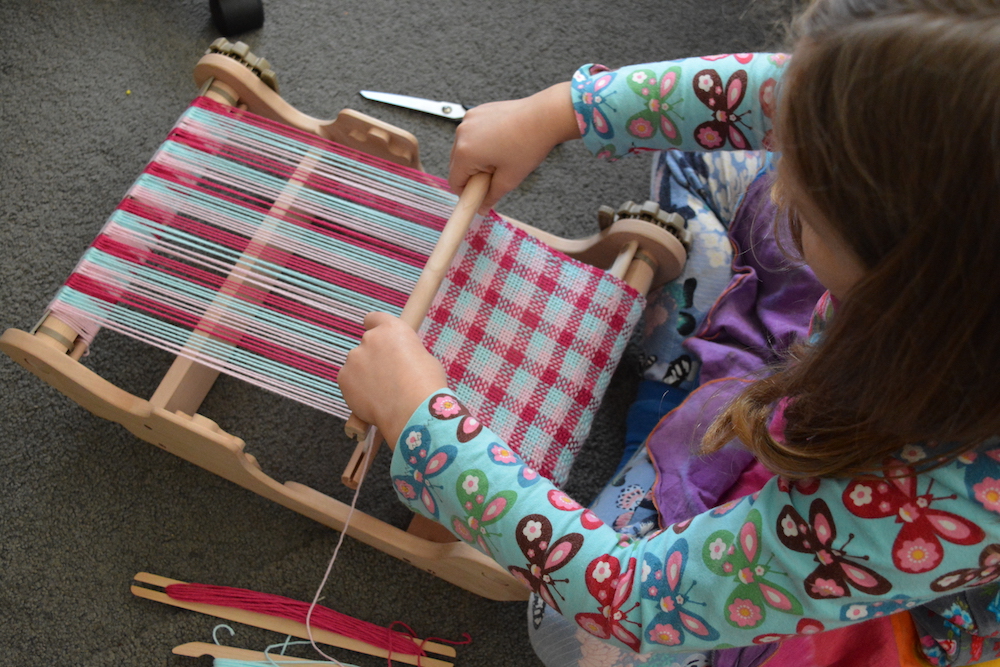
Kitchen cloths were one of the first weaving projects I ever attempted. They are really perfect for beginner weavers, as at their most simple they can be just a square of plain weave. And, at the end, the weaver has a beautiful and functional woven piece.

*Please note, this post contains affiliate links. 


If the weaver wants something a little more challenging, adding pick up sticks adds interest to the weave and functionality to the cloth, making the cloth not only very attractive but more absorbent with the added texture.


I am often asked the question "Which yarn is best for kitchen cloths?" 

In my opinion, thick cotton is the absolute best fibre for kitchen cloths. It is soft, absorbent, easy to wash and care for, unlikely to harbour bacteria if treated properly and yarns come in many different colours.


My favourite cotton to use for my cloths is from a mill not too far from me. It is a gorgeous cotton, so it makes sense for me to buy and excellent Australian owned and locally produced product.


But, what about those of you who can't access this yarn due to location? Well, there are plenty of alternatives! 


A very popular cotton is the American made Sugar n Cream. It is just the right weight for kitchen cloths, is affordable and comes in many bright and variegated colours.

There are some beautiful organic cottons out there too, such as Babytoly, which comes in natural as well as bright, happy colours.

I have also successfully used a bamboo cotton blend for cloths. The end result is a little different, the cloth is heavier when wet and does not tend to wear as well over time. Still, it make a beautiful, soft and absorbent cloth. If you're interested in trying a blend, something like this Lion Brand Blend, which is 50% bamboo and 50% cotton would work well.


I have also had fun buying white or natural cotton to dye in variegated colours, using fibre reactive dyes. You can either use the variegated as warp and a solid, contrasting colour as weft or vice versa - both give wonderful results.


My kitchen will always have handmade cloths now, I can't go back to the disposable cloths I once used!

If you would like to have a go at weaving some yourself, I can help with that!

My Etsy shop has a step by step downloadable pattern "Textured Kitchen Cloths" for rigid heddle loom that you can find here.
Or if visual learning is more your style, you may wish to take this class instead.

My Textured Cloths pattern only needs a small loom to weave, the Sampleit is perfect for this project.

I should also mention my Waffle Weave tutorial on Youtube, which gives great texture for kitchen cloths.

I hope that you will experience the joy of weaving and using your very own kitchen cloths.

Until next time...

Happy Weaving!

Which looms do you have and what is on your Wishlist?

This post contains affiliate links. I only recommend products that I own, use and love.
Ashford 60cm (24") rigid heddle loom 

This is my most used loom at this point and most of the classes I teach are on this loom. Initially, I chose it because the price point fitted my budget at the time, and I had the right amount of space for it. I've never regretted the purchase. I think of it as my little workhorse! You can check out the same loom by following this link.

Ashford Sampleit


I bought this one for my girls, who often complained that they never got to weave because my loom was always full. I think I have used it more than they have though! It is so good for sampling new ideas and designs, enabling me to have a couple of rigid heddle projects going at once. It also takes up hardly any space at all.

Ashford Inkle


I love inkle weaving, but unfortunately have not had the time to indulge and explore as much as I would like. Once again, it's not space hungry and allows me to weave a different kind of project while other larger projects are going on. This loom is for bands, but that doesn't mean that only band projects are possible, you can sew bands together to make all kinds of cool things. I have a beginner series on Youtube for using an inkle.

 David 2 Louet


Aka the love of my life! Alright, that's taking it a bit far but I do really love this loom. 8 shafts, 10 treadles, made in the Netherlands. Compact, easy to operate, beautiful to look at, and so much more. I review it here if you're interested. I have the second instalment of my Floor Loom Series coming up soon, so watch out for that one!


Previously owned - Ashford 8 shaft 80cm (30") table loom  (the loom available in this listing is a 24")


I ran out of space when I bought my floor loom, so had to sell my table loom. You can see a demonstration of me using it here and an overview of the loom here. To be honest, I really do miss this loom and often recommend them to others. I can envision myself once again investing in a table loom "one day" but in a smaller format so that it is portable for teaching. The Katie, with it's light weight and 8 shaft capability would be just the ticket.


Wishlist

Mirrix Little Guy or Big Sister


I have been doing a lot of tapestry work on my rigid heddle loom recently, which has highlighted a couple of things for me.
1. The rigid heddle loom is a good loom for playing around with tapestry, but not the best.
2. I love tapestry!
3. As tapestries are a time investment, it would be ideal for me to have a separate loom for this.

So, why would I choose a Mirrix?
Well, their looms are simple and compact but still a complete tapestry loom. It wouldn't take up a lot of space that I no longer have the luxury of! I love their sturdy and attractive design, and the shedding devices that many of the loom have is a huge bonus. I have done quite a bit of research and I feel that these are really quality looms, made by weavers for weavers. 

There is a video version of this blog post on my Youtube channel if you're a visual kinda person.

Until next time...

Happy Weaving!


What can I DO on a rigid heddle loom?

Perhaps a better question might be "What can't I do on a rigid heddle loom?". Yes, it's that versatile!

I already mentioned in the previous post that you can create more complex patterns by using multiple heddles/reeds. For example, if I want to weave a 4 shaft pattern, I can use 3 heddles/reeds to achieve that, as demonstrated in my Three Heddle Adventures class. Or, if I want to use 2 heddles I can also weave some really awesome patterns, as demonstrated in my Weaving with Two Heddles class. However, many rigid heddle weavers also achieve more complex patterns by using pick up sticks to manipulate threads that are threaded in the slots of the heddle/reed. You could think of these threads as "uncommitted", (not threaded in a hole) so free to play around with. One of the more impressive examples of complex patterns with pick up sticks is Jeen's Pinwheels, which is actually an 8 shaft pattern! You can see another great example of that on FarmNana.


My Midnight Shawl pattern uses 2 heddles/reeds to achieve a diamond pattern.

Another great boon to rigid heddle weavers is the use of Colour and Weave techniques. To break it down to a simple form, you arrange your warp and weft colours in such a way that, even though you're usually working plain weave, it can look like an impressive and complicated pattern.


My Log Cabin Table Runner is a good example of the use of Colour and Weave.


My newest Youtube video shows you what you can do by thinking outside the box. I show you how to make a wavy and a zigzag shuttle from cardboard, so fun!


Did you know that you can use your rigid heddle loom for tapestry too? You can read more about that in this post. I also share my tapestry thoughts in this video.


There are many possibilities with tapestry on the rigid heddle loom! This video series outlines the use of freestyle tapestry.


Krokbragd is one of my favourite weave structures, and is easily achievable on a rigid heddle loom. I have written about it, and have many videos on Youtube, as well as a few online classes. I just love it!

I could really go on and on because there is so much more you can do with this humble loom. Hopefully what I've written here has convinced you of the capabilities of rigid heddle weaving and given you some more material to look into.

Until next time...

Happy Weaving!


What tools do I need for rigid heddle weaving?

When you buy a rigid heddle loom, it should come with a few standard tools, which usually include:

*A heddle/reed (usually 7.5 or 8 dent)
* A warping peg and clamp for direct warping
* A clamp for holding the loom to a table while warping
* A stick shuttle
* It may include a threading and reed hook
* Cardboard warp separators (may not come with all looms)
** Some looms now come with a double heddle block built in


Apart from the standard tools, there are extra things that are either essential or come in handy.

Other essentials:

*Scissors - sharp scissors will save you a lot of frustration
*Tape measure
*Warp separators (if not received with your loom)
*Yarn
*Inch ruler (for figuring out the sett of your yarn)
*Project journal for recording all your project information
*A big mug of tea (or is that just me?!)


                                    Handy optional extras:

*Tapestry needle
*Extra heddles
*Fringe twister
*Sewing machine 
*Serger
*Loom stand
*Tapestry beater, comb or household fork
* "S" hooks or other weights
*Calculator
*Instructional books (the  Book Depository (affiliate link) has a huge range of great weaving books and this post will help you to determine which book/s might be right for you).
*Online lessons are an awesome tool to get started. You can check out my Youtube channel and my Online Weaving School for further help. 

This post is a companion post to this Youtube video, so pop over and watch if you want to see the tools and hear my explanations.

Something to remember when you're just starting out with rigid heddle weaving is that you don't need All.The.Things right away! The tools that come with a newly purchased loom are sufficient to get you started, and you can gradually build from there.

What IS a rigid heddle loom?

The rigid heddle loom has gained considerable popularity in recent years due to it's affordability, portability and versatility as a weaving loom.


The rigid heddle loom is essentially a rectangular, wooden frame loom. However, it differs from the simple frame looms that are now readily available and often used for simple tapestry, as it has a space for a heddle/reed, making it capable of producing sheds (gaps or spaces) to weave through. It is a 2 shaft loom, but has further reaching capabilities, which I will explain further in a future post. I guess you could say that it is a crossover between a simple frame loom and a table/floor loom once you start looking at the specifics.


The "rigid heddle" that the loom gets it's name from is an ingenious device made from wood and often plastic nowadays. A single heddle/reed gives your loom holes and slots (these are what allow you to create the sheds) plus it doubles as a beater. The more of these heddles/reeds you use, the greater the possibility and range of sheds, and therefore patterns, become available. Another benefit of using 2 heddle/reeds at a time is the ability to weave double width cloth, which is ultra cool and can be seen in my Double Weave Baby Blanket class. Some rigid heddle looms now come with a built in double heddle block, which means it is easy to have 2 heddle/reeds positioned on your loom.
In it's most basic, 2 shaft form, you place the heddle/reed in either an up or down position, creating a different shed each time. Using these 2 sheds will give you plain weave.

This same heddle/reed will have a predetermined size or sett, which means that once you have established the sett for your project, you choose a heddle/reed that matches. As you thread the heddle/reed, the rigid plastic slots keep the threads at a certain spacing, and that is what makes your sett.


The RHL, similar to table/floor looms, has a front and back roller, meaning that you can put on a long warp and you advance the warp as you go so that the cloth will roll around the front beam as you weave. Some looms will have the option of buying an additional warp beam that attaches to the loom and allows you to put on extra long warps. It also has a tensioning system, which varies from loom to loom, but usually involves winding a pawl or a crank at the side of the loom to achieve good tension. 


In addition to your loom, you can purchase a stand, which, in my opinion is a really good option. I talk more about that in this video.

If you purchase a RHL new, it will come with everything you need to get started (except the yarn!)

I hope this has helped you to begin to wrap your head around what a rigid heddle loom is. Next time I'll be discussing what tools you need and how they work, so stayed tuned for that one!


I have a rigid heddle loom, why would I consider buying a floor loom?

I was asked this question in one of my Facebook groups. I started to type a response, then decided it would be better answered in a blog post as it's not a simple question!

It is true that the Rigid Heddle Loom is capable of a lot (even an 8 shaft pattern if you really want to) but there are many reasons why I love to have both a RHL and a floor loom. 


I wrote a series recently that compared different types of looms that you may wish to review:

The Rigid Heddle Loom

The Table Loom

The Floor Loom

Now, I said the rigid heddle loom is capable of weaving 8 shafts, but does that mean that I would actually want to? To achieve that would mean multiple heddles, multiple pick up sticks and a pretty painstaking process that would have me leaping on to my floor loom in no time. Because the floor loom is made for this, it's set up for more complex weaves, that is it's job. So, while the RHL can be utilised for more complex weaves, that doesn't mean that it's the ideal choice.


Next, the RHL has yarn size limitations. The smallest dent heddle currently available is a 15 dent by Ashford. Yes, you can still double threads or use extra heddles to increase the available sett, but that is another difference to a floor loom and a consideration if you like to weave with fine threads.

Finally, the floor loom is a full body experience. That sounds a bit weird and new age doesn't it?! But what I mean is that you are using your head (eyes to read the pattern as you weave, if you need to), your hands to throw and catch the shuttle (your body naturally sways slightly from side to side as you get into the rhythm) and your legs (as your feet move or "walk" the treadles to operate the shafts). It's actually a bit of a workout!

Because of this "full body" approach on a floor loom, you are able to operate many actions at once. And that is the real beauty of floor loom weaving, the harmony of actions that allow you to work fast to achieve sometimes quite amazing results.

Don't forget that there are pros and cons to all types of weaving and I try not to promote one over the other because I believe each weaver needs to find the right fit for their particular needs. If it seems that I am promoting the floor loom in this article, it is only within context of answering a question.

To recap, why would I buy a floor loom? 
1. Intricacy of pattern
2. Finer threads
3. Speed and efficiency

I hope this article helps you, thank you for reading!

Table loom, rigid heddle loom, floor loom?

It is so hard to choose a loom when you are brand new to weaving! Without a doubt, the "which loom?" question is the one I get the most. And while I can't tell you which loom is the perfect one for your individual circumstances, I can tell you a little about different types and their advantages/disadvantages.

Lets start with the humble hero that I recommend most often for absolute beginners:

THE RIGID HEDDLE LOOM


The little champion of the weaving world! That is how I think of this humble loom anyway. I believe it's thanks to this loom we have seen such an enthusiastic resurgence in weaving. You can view the rigid heddle looms I own (affiliate links):
Ashford 24"
Ashford Sampleit 10"

They come in a variety of sizes, are lightweight and portable, are much more affordable than table or floor looms, are customisable by adding a stand and extra heddles, plus they are simple enough for beginners to get up and weaving quickly. The ability to direct warp means you don't need a warping board to get started. Threading is straight forward and easy. There is very little yarn wastage. You can adapt the loom to weave tapestries.You can even weave 8 shaft patterns on this loom (I've seen it done, but I don't intend to do it myself - waaay too much work for me!)


That all sounds great right? Surely there must be some drawbacks to this loom? 
Well, there are limitations to the rigid heddle loom. The tension, for example, is not like a floor or table loom. Weaving is slower, as you need to put your shuttle down after each pick in order to beat. I mentioned that you can weave up to 8 shafts, but it would take a lot of patience and mucking around that would have me personally reaching for my floor loom in a jiffy (though I realise that not everyone has that luxury!) 
I don't really think of these things as negatives, the rigid heddle loom has too much going for it to warrant any real criticism. What I have listed above are more differences as opposed to negatives.


Want to know more about the rigid heddle loom? You may wish to watch my free Rigid Heddle Loom/Table Loom Comparison video. I also have a huge range of videos for rigid heddle weavers or those interested in starting out on my Youtube channel, so be sure to watch, like and subscribe to ensure you don't miss new videos.

I also have a big range of rigid heddle weaving classes available on my Online Weaving School, I recommend you taking a look!

I hope this article has been helpful to you, next time I will discuss table looms!

10,000 subscribers giveaway!

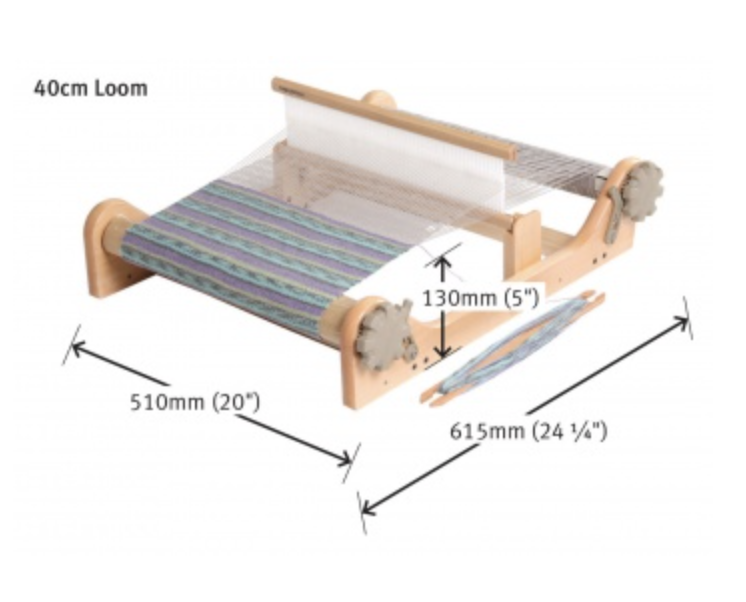
Welcome to this very special giveaway! To celebrate 10,000 subscribers on Youtube I have the pleasure of giving away to one of you lucky people, an Ashford 40cm Rigid Heddle loom along with a one year subscription to my Online Weaving School. How exciting! 


To enter, use the Rafflecopter widget below. You can choose the number of entries you get by completing the tasks - the number you complete is up to you.

a Rafflecopter giveaway


The giveaway will be drawn on December 26th 2017. Best of luck to you!

This blog is closing!

All posts will now be found at my new site.  Click here to go the the new site.