Showing posts with label floor loom. Show all posts

Which looms do you have and what is on your Wishlist?

This post contains affiliate links. I only recommend products that I own, use and love.
Ashford 60cm (24") rigid heddle loom 

This is my most used loom at this point and most of the classes I teach are on this loom. Initially, I chose it because the price point fitted my budget at the time, and I had the right amount of space for it. I've never regretted the purchase. I think of it as my little workhorse! You can check out the same loom by following this link.

Ashford Sampleit
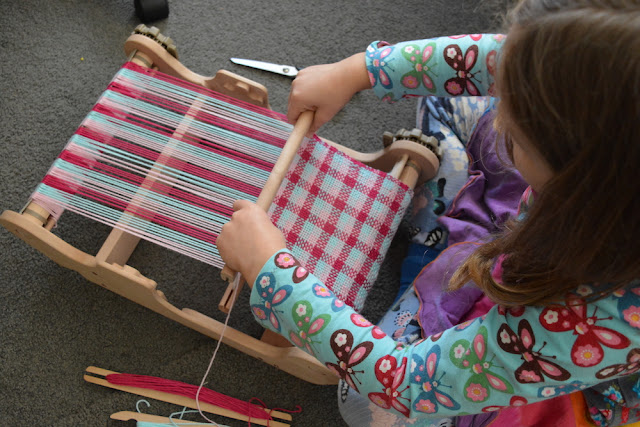


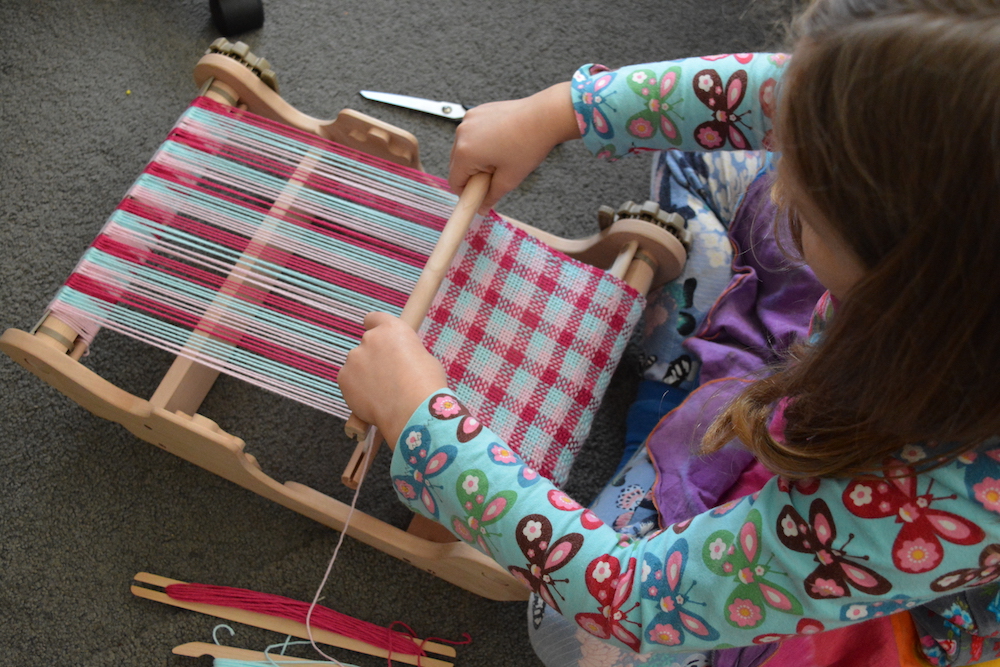
I bought this one for my girls, who often complained that they never got to weave because my loom was always full. I think I have used it more than they have though! It is so good for sampling new ideas and designs, enabling me to have a couple of rigid heddle projects going at once. It also takes up hardly any space at all.

Ashford Inkle


I love inkle weaving, but unfortunately have not had the time to indulge and explore as much as I would like. Once again, it's not space hungry and allows me to weave a different kind of project while other larger projects are going on. This loom is for bands, but that doesn't mean that only band projects are possible, you can sew bands together to make all kinds of cool things. I have a beginner series on Youtube for using an inkle.

 David 2 Louet


Aka the love of my life! Alright, that's taking it a bit far but I do really love this loom. 8 shafts, 10 treadles, made in the Netherlands. Compact, easy to operate, beautiful to look at, and so much more. I review it here if you're interested. I have the second instalment of my Floor Loom Series coming up soon, so watch out for that one!


Previously owned - Ashford 8 shaft 80cm (30") table loom  (the loom available in this listing is a 24")


I ran out of space when I bought my floor loom, so had to sell my table loom. You can see a demonstration of me using it here and an overview of the loom here. To be honest, I really do miss this loom and often recommend them to others. I can envision myself once again investing in a table loom "one day" but in a smaller format so that it is portable for teaching. The Katie, with it's light weight and 8 shaft capability would be just the ticket.


Wishlist

Mirrix Little Guy or Big Sister


I have been doing a lot of tapestry work on my rigid heddle loom recently, which has highlighted a couple of things for me.
1. The rigid heddle loom is a good loom for playing around with tapestry, but not the best.
2. I love tapestry!
3. As tapestries are a time investment, it would be ideal for me to have a separate loom for this.

So, why would I choose a Mirrix?
Well, their looms are simple and compact but still a complete tapestry loom. It wouldn't take up a lot of space that I no longer have the luxury of! I love their sturdy and attractive design, and the shedding devices that many of the loom have is a huge bonus. I have done quite a bit of research and I feel that these are really quality looms, made by weavers for weavers. 

There is a video version of this blog post on my Youtube channel if you're a visual kinda person.

Until next time...

Happy Weaving!


I have a rigid heddle loom, why would I consider buying a floor loom?

I was asked this question in one of my Facebook groups. I started to type a response, then decided it would be better answered in a blog post as it's not a simple question!

It is true that the Rigid Heddle Loom is capable of a lot (even an 8 shaft pattern if you really want to) but there are many reasons why I love to have both a RHL and a floor loom. 


I wrote a series recently that compared different types of looms that you may wish to review:

The Rigid Heddle Loom

The Table Loom

The Floor Loom

Now, I said the rigid heddle loom is capable of weaving 8 shafts, but does that mean that I would actually want to? To achieve that would mean multiple heddles, multiple pick up sticks and a pretty painstaking process that would have me leaping on to my floor loom in no time. Because the floor loom is made for this, it's set up for more complex weaves, that is it's job. So, while the RHL can be utilised for more complex weaves, that doesn't mean that it's the ideal choice.


Next, the RHL has yarn size limitations. The smallest dent heddle currently available is a 15 dent by Ashford. Yes, you can still double threads or use extra heddles to increase the available sett, but that is another difference to a floor loom and a consideration if you like to weave with fine threads.

Finally, the floor loom is a full body experience. That sounds a bit weird and new age doesn't it?! But what I mean is that you are using your head (eyes to read the pattern as you weave, if you need to), your hands to throw and catch the shuttle (your body naturally sways slightly from side to side as you get into the rhythm) and your legs (as your feet move or "walk" the treadles to operate the shafts). It's actually a bit of a workout!

Because of this "full body" approach on a floor loom, you are able to operate many actions at once. And that is the real beauty of floor loom weaving, the harmony of actions that allow you to work fast to achieve sometimes quite amazing results.

Don't forget that there are pros and cons to all types of weaving and I try not to promote one over the other because I believe each weaver needs to find the right fit for their particular needs. If it seems that I am promoting the floor loom in this article, it is only within context of answering a question.

To recap, why would I buy a floor loom? 
1. Intricacy of pattern
2. Finer threads
3. Speed and efficiency

I hope this article helps you, thank you for reading!

Which loom to buy, part 3 - the Floor Loom

It's hard to know where to start the discussion on floor looms for a few reasons. There are many, many types of floor looms available from many different loom companies. Out of the three types of looms I have discussed in this series, a floor loom is the one that requires the most research on the part of the buyer to ensure the right loom is purchased.


There are 3 main types of floor loom available -
* Countermarch
*Counterbalance
*Jack

I'm not going to go into the specifics of each loom here, (my Introduction to Floor Loom Weaving course does that) but there are obvious differences between each one that should affect your decision making. 

Lets have a look firstly at the benefits of a floor loom in general:
*Complex patterns can be achieved
*There are many choices for how many shafts, with many looms having upgrades to more shafts later.
*They are large and sturdy pieces of equipment
*They can take long warps and most looms have the ability to install a second warp beam for even longer warps.
*You can weave fast because your feet are operating the treadles, which in turn operate the shafts and there is no need to set the shuttle down in between picks.
*There are many resources available for floor loom weaving, in the form of books, online classes and face to face classes.
*Materials and parts and generally readily available.
*There are so many choices, from a basic 4 shaft to a computerised loom (depends on your budget!)


And, the negatives:
*Many floor looms are large and heavy, so not portable
*Depending on the loom, it can take up a lot of space - so you need to have room to house the loom as well as clearance space so that you can move around the loom for warping etc.
*A floor loom can be very expensive.
*The warping/threading process can be hard on your back.
*Warping is a long process, it takes a while to get used to this fact!


Would I recommend buying a secondhand floor loom? 
Yes and no! If you already have a working knowledge of floor looms so that you can make an educated decision, then absolutely look for a secondhand loom, which can literally save you thousands of dollars.
BUT...
If you are completely new to floor loom weaving, have never used one and are not familiar with the parts and what they do, I would be very cautious about buying secondhand. Many people sell looms from a deceased estate or similar and they really know nothing about weaving or looms - even whether it is in working order. This can actually work in your favour if you are educated because the vendor may sell cheaply, not understanding the value of what they are selling!

When looking at a second hand loom ask yourself - 
*Does it have all the necessary parts? If not, what is the make of the loom? Are these still made? Am I going to be able to get replacement parts? If the loom is in pieces - when was it last put together? Am I able to put it together? If the reed is rusty, am I confident that I can return it to it's former glory? Am I going to regret this purchase because I have not researched enough? And, so on!

A great way to buy second hand can be through a weaving guild. The loom will generally have been well cared for and in use. The seller may be willing to give you a lesson on setting up. You can try it out before you buy in many cases. They will know the history of the loom. 

Try not to be impatient, wait for the right loom at the right price.

The best advice I can give to someone who is in the market for a new or used loom is DO YOUR RESEARCH! Talk to people, read articles, get advice.

I hope this series has helped you to understand more about different types of looms.

For more on floor loom weaving, check out my free Youtube videos:


Until next time, Happy Weaving!


This blog is closing!

All posts will now be found at my new site.  Click here to go the the new site.